Where Two or Three are Gathered:
A Christian Socialist Family Tree
The history of Christian Socialism is littered with various groups, often with similar names and
overlapping membership. The following is a short chronological guide to such groups, the dates
of their existence and the names of a few of their most prominent members. It is hoped this will
give an impression of the evolution and development of the movement and the importance of
certain personalities to the history of both individual groups and the movement as a whole. It is
not meant to be comprehensive, having a decidedly British focus and not including other ‘radical’
Christian groups, only those explicitly espousing some form of socialism. Both ‘revolutionary’
and ‘reformist’ strands have been included, and in addition to those groups particularly important
to the development of Sacramental Socialism, other Anglican and non-Anglican groups have
been included as an indication of the surrounding milieu in which the SSS evolved. Additions and
corrections are welcome.
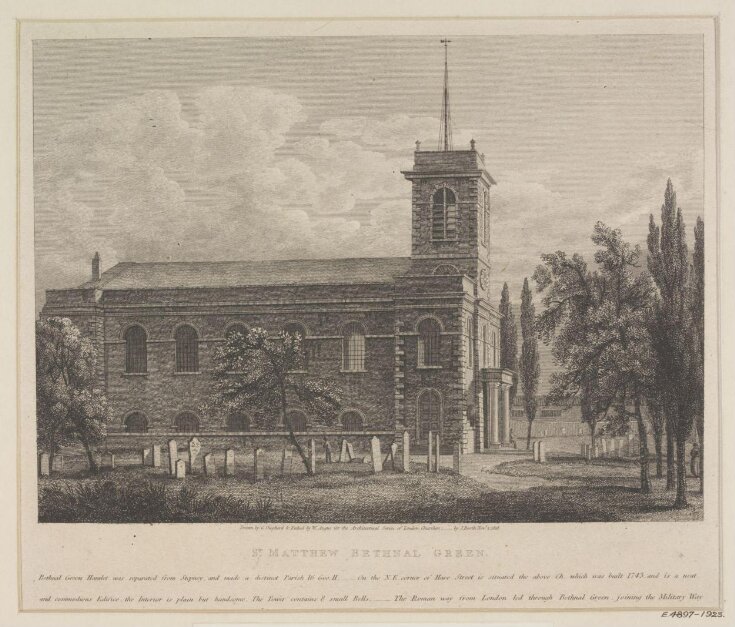
Guild of St Matthew (1877-1909)
Founded by Stewart Headlam as a parish devotional guild but soon expanded and became the first explicitly socialist organisation in Britain. Initiated the fusion between Ritualism and the theology of F.D. Maurice and developed a sacramental socialism. Eventually, a number of members left for the CSU following Headlam’s support of Oscar Wilde, while others sought a more explicit affiliation with secular socialism and the new labour parties. Members included Frederick Verinder, W.E. Moll, Charles Marson, Thomas Hancock, John Shuttleworth, Conrad Noel, James Adderley, Percy Widdrington, Lewis Donaldson and Percy Dearmer. Published the Church Reformer.
Christian Socialist Society (1885-1892)
Founded by Charles Marson as an ecumenical organisation independent of all theological
views. Enabled Nonconformists and broad-church members to participate in an
organisation with similar political views to the Guild of St. Matthew but without the Anglo-Catholic
theology. Published the Christian Socialist.
Christian Social Union (1889-1919)
More genteel and reformist than the Guild of St. Matthew, and often disparaged as a mere talking-shop.
Members included Charles Gore, Henry Scott Holland, B.F. Westcott, Edward Talbot,
Walter Frere, Conrad Noel, Percy Dearmer, James Adderley, Ruth Kenyon, Lewis
Donaldson, William Temple and W.E. Moll. Important for placing social issues at the
forefront of Church life and for developing Anglican incarnational theology. Many
members wished for a more explicitly socialist stance and left to form the Church
Socialist League. Eventually subsumed into the Industrial Christian Fellowship.
Published the Economic Review, Goodwill and Commonwealth.
Christian Socialist League (1894-1898)
Founded by the Baptist John Clifford as another attempt at an ecumenical socialist
organisation. Guild of St. Matthew members Charles Marson and John Shuttleworth served on the
executive.
Christian Social Brotherhood (1898-1903)
Ecumenical group founded at the Mansfield House Settlement.
Church Socialist League (1906-1923)
Founded following an address by the Labour MP Keir Hardie at Mirfield, with the initial
aim of furthering the socialism of the Labour parties within the Church. Absorbed many of
the more radical Guild of St. Matthew and Christian Social Union members. A gradual split eventually developed between those who wanted explicit affiliation with the parliamentary labour parties and those who
saw their role as primarily theological. Members included Conrad Noel, W.E. Moll,
Percy Widdrington, Paul Bull, Walter Frere, Lewis Donaldson, Percy Dearmer, James
Adderley, Maurice Reckitt, Ruth Kenyon, Charles Record and Harold Buxton. Published
the Church Socialist.
Catholic Socialist Society (1906-?)
Founded in Scotland by John Wheatley and William Regan to promote the ideals of
socialism among Catholics. Membership was confined to practicing Roman Catholics.
Was in agreement and co-operation with the Independent Labour Party, Wheatley going
on to become an MP.
Free Church Socialist League (1909-1912)
Founded by the Baptist minister Herbert Dunnico, who was later involved in forming the
Society of Socialist Christians.
Sigma Society (1909-?)
Founded by Samuel Keeble and Arthur Henderson as a radical Methodist group. Keeble
was later involved in the founding of the Society of Socialist Christians.
Catholic Crusade (1918-1936)
Formed by Conrad Noel following his departure from Christian Socialist League over its apparent abandonment of the political for the theological. Explicitly Anglo-Catholic in theology and revolutionary in politics. Was the first socialist organisation to welcome the Russian Revolution. Developed a full-blooded sacramental socialism and was involved in the emergence of the British Communist Party, as well as the later Left criticism of it. Eventually split over attitudes to Stalin and the Soviet Union. Members included Jack Putterill, John Groser, Jack Boggis, Jack Bucknall, Harold Mason, Etienne Watts, Jim Wilson and Alan Ecclestone. Published the Catholic Crusader.
League of the Kingdom of God / Christendom Group (1923-never formally
dissolved)
Formed from the remains of the Church Socialist League by Percy Widdrington,
following the publication of The Return of Christendom (1922). Concerned with the
development of a Christian sociology and Kingdom theology, and eschewed party
affiliation. Mounted the annual Anglo-Catholic Summer Schools in Sociology from
1925-1955. Also organised Christendom conferences from 1932 and thus became known
as the ‘Christendom Group’. Involved in the COPEC (1924) and Malvern (1941)
conferences. Members and those associated included Lewis Donaldson, Harold Buxton,
V.A. Demant, T.S. Eliot, Gresham Kirkby, Lionel Thornton, Maurice Reckitt, Eric
Mascall, Dorothy Sayers, Ruth Kenyon, Richard Tawney, William Temple and Michael
Ramsey. Published Christendom.
Society of Socialist Christians (1923-1932)
Formed by Claude Smith, Charles Record, John Spokes and Fred Hughes from the break-
up of the Church Socialist League as an ecumenical group giving explicit support to the
Labour Party, to which it became affiliated. Embraced members from many
denominations, including Lewis Donaldson, Samuel Keeble, Herbert Dunnico and
Donald Soper. Published The Crusader and The Socialist Christian.
Christian Socialist Crusade (1930-1932)
Founded to co-ordinate the work of Christian Labour MPs, with George Lansbury as
President. Held numerous meetings and published articles by MPs to promote Christian
Socialism among the public. Worked closely with the Society of Socialist Christians and encouraged Society of Socialist Christians membership. Donald Soper was involved.
League of the Redemption (1931-1933)
Founded by John Groser after leaving the Catholic Crusade over his support for a Labour
rather than a Communist election candidate. Remained small and eventually merged with
the Socialist Christian League.
Socialist Christian League (1932-1960)
Formed from the union of the Society of Socialist Christians and the Christian Socialist
Crusade. Similar in outlook, policy and membership to the Society of Socialist Christians, including initial
affiliation with the Labour Party. Disaffiliated in 1933. Members included Lewis
Donaldson, Samuel Keeble, Charles Record, Jack Boggis, Donald Soper, Gresham
Kirkby, Maurice Reckitt, Richard Tawney and John Groser. Eventually became part of
the Christian Socialist Movement. Published the Socialist Christian.
Order of the Church Militant (1936-1942)
Formed by Conrad Noel as the anti-Stalinist successor to the Catholic Crusade. Members
included Jack Bucknall, Jim Wilson, Harold Mason, and Frederick Hastings Smyth
during his stay in Britain. Basically dissolved on the death of Noel.
Society of the Catholic Commonwealth (1939-1967)
Founded by Frederic Hastings Smyth, and attempted a creative fusion of Thomist
theology and Marxism. Had cells in the USA, Canada, Japan, Korea and, for a short
period, in the UK. Smyth developed important ideas on the social theology of the
Eucharist. Members included John Rowe, John Wild, Elmer Smith, and Archer Torrey.
Ted Mellor was a postulant for secular membership at the time of Hastings Smyth’s death
in 1960.
Council of Clergy and Ministers for Common Ownership / Society of Socialist
Clergy and Ministers (1942-1960)
Founded after the 1941 Malvern Conference, which was chaired by William Temple and
involved Christendom members. More left-wing and sympathetic to the Soviet Union
than the Socialist Christian League. Campaigned for the adoption of common ownership by the Labour
government. Members included Stanley Evans, Jack Boggis, Jack Putterill, Hewlitt
Johnson and Alan Ecclestone. Eventually became part of the Christian Socialist
Movement. Published Magnificat.
1950 Group (1949-1950)
A centre for Socialist Christian research and information. Members included Richard
Acland, Tom Driberg and John Groser. Worked closely with the Socialist Christian League.
Parliamentary Socialist Christian Group (1949-1952)
Founded by Skeffington Lodge to revitalise Christian Socialism in parliament, against the
advice of the Socialist Christian League. Attracted an initial membership of 81 MPs including Richard Acland,
Roy Jenkins and Harold Wilson, but had short-lived appeal, despite a joint conference
with Socialist Christian League.
December Group / Slant Group (1958-1970)
A Roman Catholic group growing from the December Group meetings in Spode House
and gathered around the journal Slant, in particular Terry Eagleton, Herbert McCabe,
Francis MacDonagh, Laurence Bright, Adrian Cunningham and Brian Wicker. Attempted
a creative interaction of Marxism and Vatican II theology.
Christians on the Left (formerly Christian Socialist Movement) (1960-present)
Formed from the union of the Society of Socialist Clergy and Ministers and the Socialist Christian League, adopting the joint document Papers From the Lamb (1959), which was drawn up by a group around Tom Driberg. Donald Soper was elected as first Chair and the first Executive included Stanley Evans and Jack Putterill and John Groser and Gresham Kirkby. Gradually became more reformist and formally affiliated to the British Labour Party in 1986. Abandoned an explicit commitment to common ownership, along with the Labour Party, in 1995. Membership is now large and includes many Labour MPs. Publishes the Christian Socialist.
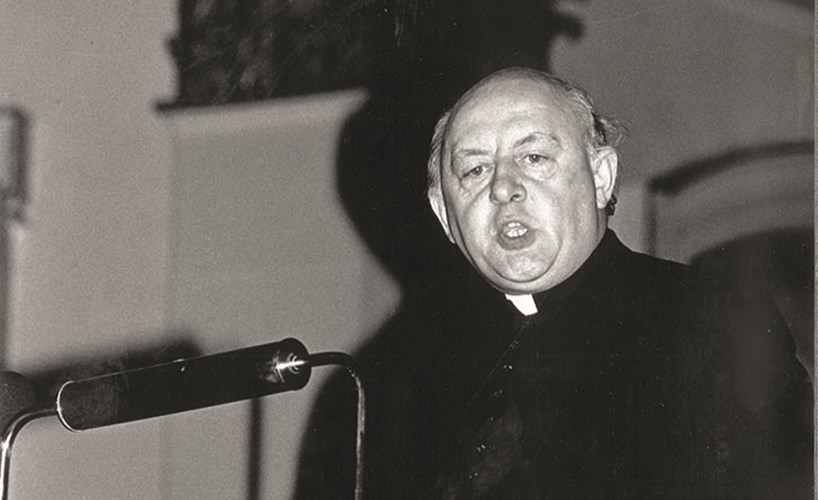
Jubilee Group (1974-2003)
Founded by Kenneth Leech as a loose support network for socialist Christians mainly in the Anglican Catholic tradition. Wished to encourage a revival of the radical Anglo-Catholic Socialist tradition, in particular that of the Catholic Crusade. Included Marxists, anarchists and socialists of many shades. Published much theological material in the form of booklets and discussion papers, as well as the Jubilee Update and Newsletter, and those affiliated have included Gresham Kirkby, John Rowe, Rowan Williams, John Saward, John Milbank, David Nicholls, Terry Drummond, Simon Barrow, Judith
Pinnington, Sara Maitland and Valerie Pitt, Paul Butler, Andy Delmege, Mike Futers. The first American group was formed in Cambridge, Massachusetts, around 1980 but was short lived. Other local groups followed, including one in Chicago. The Cambridge group included John and Elizabeth Orens, Emmett Jarrett, Ted Mellor, and Eleanor McLaughlin.
Christian Organisations for Social, Economic and Political Change (1980-1990)
Founded as an umbrella group representing numerous socialist and radical Christian
organisations, to encourage critical support of, and participation in, the Labour
Movement. Both the Jubilee Group and the Christian Socialist Movement were represented. Became focussed on the opposition to Thatcherism. Kenneth Leech and Simon Barrow were among those involved.
Anglican Left (1999-2011)
An e-mail support group for Anglicans and others on the Left. Founded in the U.S. by
Ted Mellor, Charles Sinay, and other supporters of the Anglo-Catholic Socialism
website, with the cooperation of members of the Jubilee Group in the U.K. Grew to a
wide global membership.
Society of Sacramental Socialists (2005-present)
Founded from the dissolving of the Jubilee Group as a more tightly structured Anglo-Catholic Socialist group. Sees itself in the tradition of the Guild of St Matthew, the Catholic Crusade and the Jubilee Group. Includes former Jubilee Group members and members of Anglican Left.
 The Society of Sacramental Socialists